Analyzing Global Waste Impact and the Path Toward Behavioral Sustainability
Introduction: The Invisible Crisis
In the contemporary era, often referred to by geologists as the Anthropocene, human activity has become the dominant influence on climate and the environment. Perhaps the most visible and visceral evidence of this influence is the global waste crisis. What was once a localized concern regarding landfill space has evolved into a borderless ecological emergency. The "garbage impact" on the world today is not merely an aesthetic grievance; it is a fundamental disruption of the biological and chemical processes that sustain life on Earth.
From the deepest oceanic trenches to the highest Himalayan peaks, the remnants of human consumption specifically plastics, polythene, and synthetic polymers are rewriting the geological record. To address this, we must move beyond the superficial "reduce, reuse, recycle" slogans and engage in a rigorous examination of how waste impacts our global systems and how specific, research-backed human habits can pivot our species toward a circular existence.
The Macro Impact: Why "Garbage" is a Global Pathogen
The environmental impact of waste is often discussed in terms of volume, but the true danger lies in persistence and toxicity. Unlike organic waste, which reintegrates into the nutrient cycle via decomposition, modern waste products like polythene are designed for durability, not degradability.
Marine and Terrestrial Choking The world’s oceans have become the ultimate sink for terrestrial waste. Current estimates suggest that over 11 million metric tons of plastic enter the ocean annually. This macro-waste physically alters habitats, destroying coral reefs and choking marine megafauna. However, the impact on land is equally devastating. In developing urban centers, polythene waste clogs drainage systems, leading to catastrophic flooding and creating stagnant breeding grounds for disease-carrying insects. The "garbage" we discard does not go "away"; it simply migrates, often returning to human populations in the form of environmental hazards.
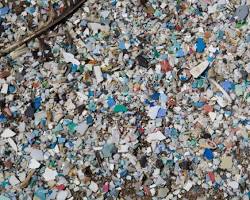
The Chemical and Microplastic Threat Perhaps the most insidious impact of plastic and polythene is their fragmentation. Through UV exposure and mechanical wear, large plastic items break down into microplastics particles smaller than five millimeters. Research has confirmed that these particles act as magnets for persistent organic pollutants (POPs). When ingested by low-level organisms, these toxins bioaccumulate, increasing in concentration as they move up the food chain, eventually reaching human dinner plates. This is no longer just an "environmental" issue; it is a public health crisis involving endocrine disruption and reproductive toxicity.
The Psychology of Disposability
To solve the waste crisis, we must understand the "Human Simple Habits" that created it. For the last seventy years, global markets have prioritized "frictionless consumption." Polythene bags, single use containers, and plastic packaging were marketed as symbols of hygiene and modernity. This created a psychological detachment between the act of purchasing and the consequence of disposal.
The "convenience culture" has conditioned the human brain to view valuable resources as valueless after a single use. Overcoming this requires more than just policy; it requires a fundamental rewiring of the individual’s relationship with physical matter. We must transition from a "Linear Economy" (Take-Make-Waste) to a "Circular Economy" where the concept of waste is designed out of the system entirely.
Strategic Habit Modification: Minimizing the Footprint
While systemic change from corporations and governments is mandatory, the aggregate power of individual habit modification is the fastest way to reduce the immediate waste load. The following sections outline professional, actionable strategies for minimizing harmful usage through deliberate lifestyle shifts.
1. The Refusal Framework: Transitioning from Polythene
The most effective way to manage waste is to prevent its entry into the household. Polythene bags are the primary culprit in localized pollution. The professional standard for modern living should be the "Always-Ready" kit. This involves keeping high-density, reusable canvas or jute bags in vehicles or workspaces. By making the refusal of a plastic bag a default habit rather than a conscious choice, an individual can prevent the entry of hundreds of polythene units into the ecosystem annually.
2. Decoupling Hydration from Plastic
The consumption of bottled water is one of the greatest inefficiencies of the modern age. Beyond the waste of the PET bottle itself, the carbon footprint of transporting water is immense. A professional habit shift involves the adoption of high-grade filtration systems and the use of inert materials like stainless steel or glass for personal hydration. This eliminates the "convenience" trap of grab-and-go plastics and significantly reduces the demand for new plastic production.
3. Rethinking the "Clean" Aesthetic
Much of our harmful waste comes from the personal care and home maintenance sectors. Liquid soaps, detergents, and shampoos are primarily composed of water, packaged in thick plastic bottles. A simple yet high-impact habit is the transition to concentrated or solid-state products. Bar soaps, shampoo bars, and laundry strips offer the same chemical efficacy without the plastic housing. Furthermore, the habit of seeking "Refill Stations" allows consumers to reuse the same high-quality containers for years, treating the vessel as a durable asset rather than a disposable shell.
4. The Kitchen Revolution: Beyond Cling Film and Foil
In the domestic sphere, the usage of polythene-based cling wraps and aluminum foils contributes to a massive amount of non-recyclable "soft" waste. Research into sustainable kitchens suggests that switching to beeswax wraps or silicone lids provides a superior seal and eliminates the need for single-use disposables. Additionally, moving away from plastic food storage containers to glass or ceramic reduces the risk of chemical leaching into food, aligning environmental health with personal wellness.
5. Ethical Procurement and "Pre-cycling"
A professional approach to waste involves "Pre-cycling"—the practice of making purchasing decisions based on how a product is packaged. This habit involves choosing loose produce over pre-wrapped vegetables and opting for brands that utilize biodegradable or easily recyclable cardboard over multi-layered laminates. By shifting consumer demand, individuals signal to the market that wasteful packaging is a liability, forcing corporate innovation.
The Role of Research and Data in Personal Habits
It is essential to recognize that "garbage impact" is not a static data point. It is a dynamic result of billions of small decisions. Research in behavioral economics shows that when individuals track their waste output, they naturally begin to reduce it. Keeping a "waste log" for even a single week can reveal patterns of mindless consumption that can be easily corrected.
Furthermore, we must address the "Bioplastic" myth. Many people adopt the habit of using "biodegradable" plastics, believing them to be a perfect solution. However, many of these materials require industrial composting facilities to break down and will persist in a backyard or ocean just as long as traditional polythene. A professional, research-based habit involves prioritizing reusables over alternative disposables.
The Great Pacific Garbage Patch: A Continent of Waste
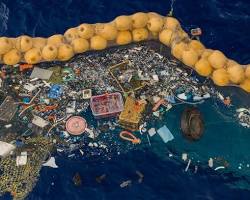
Located between Hawaii and California, the GPGP is the largest of the five offshore plastic accumulation zones in the world’s oceans. It is not a solid "island" of trash as often visualized, but rather a massive area where the concentration of plastics is significantly higher than in surrounding waters.
 Scale and Composition
Size: It covers an estimated surface area of 1.6 million square kilometers an area twice the size of Texas or three times the size of France.
Mass: It is estimated to contain approximately 80,000 tones of plastic, comprised of roughly 1.8 trillion individual pieces.
The "Plastic Soup": While large items like "ghost" fishing nets, crates, and bottles make up the bulk of the mass, the majority of the patch consists of microplastics. These particles are suspended throughout the water column, creating a cloudy, "soupy" consistency that makes it nearly impossible to clean using traditional methods without harming marine life.
 The Biological Toll
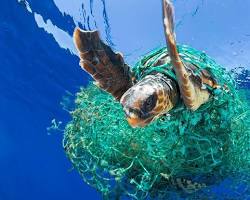
The GPGP acts as a biological trap. Sea turtles frequently mistake floating plastic bags for jellyfish, their primary food source. Albatrosses and other seabirds skim the surface for fish eggs but instead swallow small plastic fragments, which they then feed to their chicks. This leads to starvation and death, as the birds' stomachs fill with indigestible debris rather than nutrients.
 Connecting the Patch to Personal Habits
The Great Pacific Garbage Patch is the physical manifestation of the "Psychology of Disposability." Every piece of polythene or single-use plastic that escapes a waste management system has the potential to be carried by river systems and ocean currents into these gyres.
By adopting the Refusal Framework and Decoupling from Plastic (as outlined in the strategies above), we directly starve these ocean patches of new material. The GPGP serves as a grim reminder that in a globalized ecosystem, there is no such thing as "throwing something away" it always ends up somewhere. Transitioning to a circular existence is the only way to ensure these plastic "continents" stop growing and eventually begin to recede through long-term recovery efforts.
Conclusion: The Ethics of Stewardship
The impact of garbage on the world is a reflection of a temporary lapse in human stewardship. We have treated the Earth as an infinite resource and an infinite sink, but the data clearly shows we have reached the limits of both.
Transitioning to a lifestyle that minimizes plastic and polythene is not merely an "eco-friendly" hobby; it is a professional and ethical necessity for the 21st-century citizen. By adopting the habits of refusal, durable substitution, and pre-cycling, we can significantly diminish our personal contribution to the global waste crisis.
The future of the world does not depend on a few people doing "zero waste" perfectly; it depends on millions of people making simple, sustainable habits a non-negotiable part of their daily lives. The "garbage" we save today is the ecosystem we preserve for tomorrow.